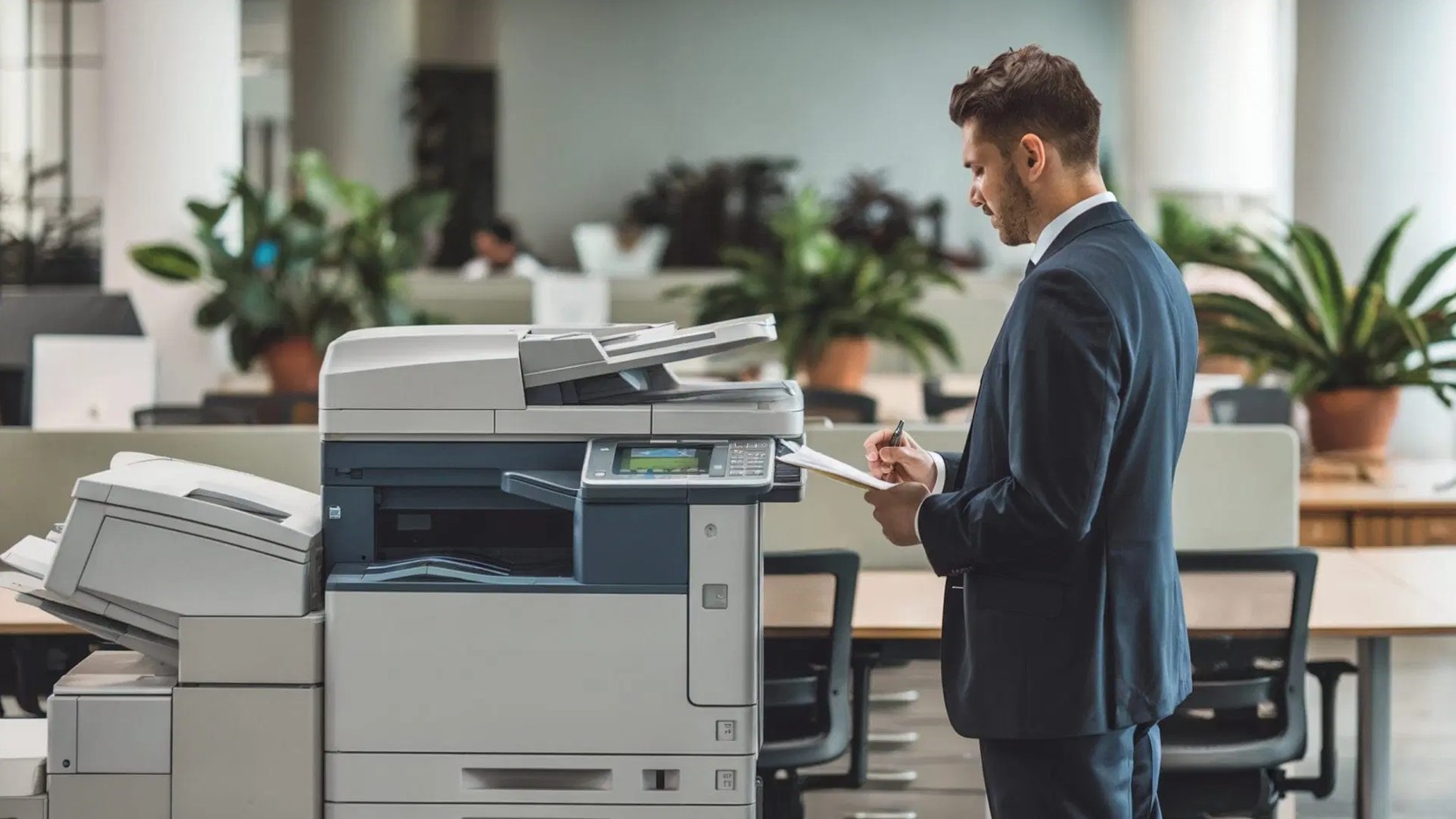
With the age of instant information and electronically operated businesses, a decent and dependable office printer is paramount. With so much of everything nowadays being done on the web, printers still remain at the forefront of every modern business. Bills and contracts, advertising pieces and customer records, businesses still rely on the utilization of everyday and timely print equipment. But such quality equipment has a price tag for small firms, start-up firms, or otherwise.
Come in printer leasing with a cost-effective and viable alternative. It provides organizations with the latest printing equipment without the huge up-front expense. You have a small office or operate a multi-site firm? Printer leasing can provide flexibility, scalability, and cost-effectiveness in the long term.
1. What Is Printer Leasing?
Leasing of a printer is where a company rents a printer or multifunction device (MFD) from an equipment leasing company for a specific term, e.g., 12 months to 5 years. Rather than buying the device, the company pays a monthly fee to use the printer during the contract term.
End-of-contract options:
- Upgrade to a new model
- Roll over the lease
- Buy the printer at a discount
- Return the printer and reverse the transaction
2. Leasing Printer Types Available
The leasing companies are generally in the business of providing general types of printers for diversified business use. The typical ones are:
a) Laser Printers
Specifically designed for high-volume printing at high speed with clear definition of text.
b) Inkjet Printers
Specifically designed for picture-quality printing, usually adopted by design or creative business companies.
c) Multifunction Printers (MFPs)
These integrate printing, scanning, copying, and even faxing in one unit.
d) Wide-Format Printers
They are used by architectural, engineering, or graphic design firms to create output of large sizes.
f) Production Printers
Commercial print publication or business heavy-duty use would be its use on high-volume machines.
3. Benefits of Printer Leasing
Leasing has plenty of advantages for businesses, big or small. Some of the most effective benefits are discussed as follows:
a) Reduced Upfront Costs
Purchasing a business-class printer will set you back thousands of pounds. Leasing sidesteps the initial expense.
b) Fixed Monthly Payments
Fixed monthly payment simplifies budgeting and sidesteps surprise repair or upgrade expense.
c) Access to Newer Technology
Leasing allows you to move up to newer machines with greater features without your having to swap out old technology yourself.
d) Maintenance and Support Included
Most of the lease agreements incorporate servicing, maintenance, and technical support, thus decreasing in-house IT personnel workload.
e) Tax Efficiency
The payments are deductible as operating expenses, with economic benefits.
f) Scalability
If your business grows, you can install new or newer printers to cope with your growing needs.
g) No Depreciation Worries
You do not worry about its deprecation since you do not own the printer.
4. The Printer Leasing Process
Printer leasing typically involves the following process:
Step 1: Define Your Printing Requirement
Think about your monthly print volume, colour as opposed to black & white needs, print speed, and other facilities like scanning or faxing.
Step 2: Get Quotations
Go to printer leasing companies and get quotations in relation to price, terms of service, and model printer.
Step 3: Select a Leasing Scheme
Select a model printer and lease duration most appropriate to your business needs and your company’s budget.
Step 4: Installation and Setup
The vendor installs and delivers the printer, sometimes providing employees with training in how to use it.
Step 5: Ongoing Maintenance
Repairs, toner or ink replacement, and software updates are typically part of your agreement.
Step 6: End-of-Term Choices
At the end of the lease, renew, upgrade, purchase, or return the printer.
5. Important Points to Remember Before Leasing
Remember the following points before signing the lease:
a) Contract Term
Longer terms equal lower monthly payments, but you’re locked into older equipment. Shorter terms equal flexibility.
b) Page Volume Limits
Page volume limits are included in some contracts. Going over the volume will cost you more.
c) Maintenance Provisions
Make sure response times for repair and service are met and meet your operation requirements.
d)Upgrades and Early Termination
Make sure pre-cancellation or upgrade is permitted under the lease and, if so, the price.
e) Toner and Consumables
Determine if toner, ink, and paper are included under the lease or extra fees.
f) Concealed Costs
To recall while being cautious about setup fees, delivery fees, or unintentional damage fees.
6. Who is Printer Leasing Appropriate For?
Printer leasing is appropriate for the majority of business types and company sizes:
- Start-ups and SMEs who desire to utilize free cash flow
- Companies growing that wish to take advantage of scalable printing technology
- Forward-thinking businesses who desire to take advantage of enhanced print and color quality availability
- Heavy-use printing schools and school districts
- Several departments of a business with centralized printing requirements
Even home office and small businesses might quite well find it worthwhile to lease if their printing requirements are periodic and professionally demanding.
7. The Proper Leasing Company
Even though making a choice between a printer leasing company, consider:
- Business reputation and history
- Variety of types and brands available
- Ease of having support available from the customers
- Ease of having flexible terms of contracts available
- Client referrals or test cases
- Service level agreements (SLAs) for repair and downtime
Having a good supplier is having a hassle-free, smooth experience whenever one prints.